
Source: Intelligent Instructor
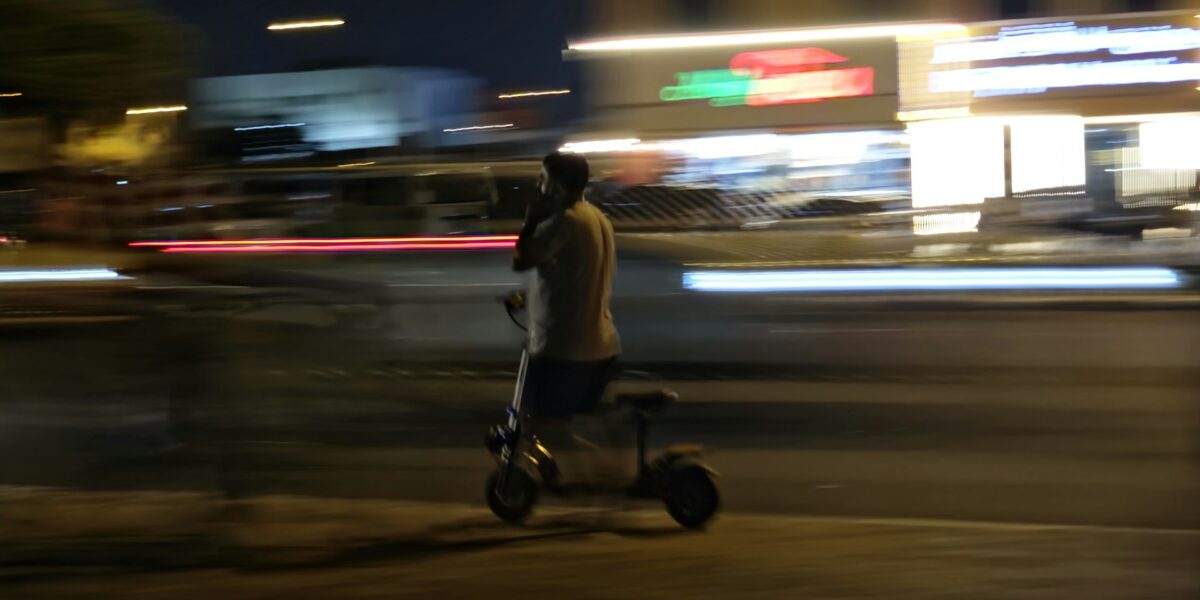
Two Wheels On Trial
Government extends E‑Scooter trials to 2028 amid rising concerns over safety and lack of regulation
In a significant policy update, the UK government has announced that the current rental e‑scooter trials will be extended until May 2028.
This opens the door for new local authorities across England to apply to participate in the ongoing trials.
Until now, only 18 trial areas—including London, Newcastle, Liverpool and Birmingham—were authorised to operate public rental schemes.
Slow or sensible?
Announcing the extension, transport ministers say the extension will help gather vital data on safety, usage patterns, environmental impact and how e‑scooters fit into the broader transport ecosystem.
However, industry operators such as Voi and Lime have warned that prolonged legislative uncertainty is holding back investment and integration into public transit planning.
At the same time, the public is confused and seemingly unaware that the use of electric scooters is illegal outside trial areas, except on private land.
Police and other enforcement bodies also lack the government’s direction and resources to prevent the illegal use of scooters.
Crashes and casualties
Safety concerns around both rental and private e‑scooter use continue to mount.
According to Department for Transport (DfT) data:
-
In the year to June 2023, there were 1,269 collisions involving e‑scooters, including seven fatalities and 390 serious injuries.
-
For 2022 alone, DfT statistics reported 12 deaths, around 440 serious injuries, and 1,040 slight injuries linked to e‑scooter incidents—up from 10 deaths and 418 serious injuries in 2021.
-
Casualties include riders as well as pedestrians, with 233 pedestrians injured and 47 cyclists also caught up in incidents in 2022.
- Casualty statistics for e-scooter use are generally considered to be highly conservative.
These figures reflect only incidents recorded by police.
A separate analysis by the Parliamentary Advisory Council for Transport Safety (PACTS) found that fewer than 10% of hospital-treated e‑scooter injuries were reflected in official police data, and just 26% of the most serious hospital cases appeared in crash statistics.
PACTS warns that this under‑reporting is masking the true scale of the risk.
Legal vacuum outside trial zones
Critics highlight a growing “wild west” situation as many one million private e‑scooters in circulation are ridden illegally on public roads and pavements—often with little enforcement.
Rental scooters are permitted under regulations, but only within designated trial areas, governed by rules such as speed limits (usually 15 mph) and licensing requirements.
Private e-scooters, in contrast, remain banned from public land; yet, enforcement is patchy.
While some police forces, such as Kent and the City of London, have seized and destroyed large numbers of unlicensed scooters, nationwide action remains sporadic.
A senior DfT spokesperson stressed: “Riding a privately owned e‑scooter on public land remains illegal.”
However, as PACTS and road safety advocates note, without national legislation addressing licensing, training, minimum standards, and enforcement, the illegal use continues unchecked.
The extension of trials only exacerbates the problem as the government fails to provide effective coordinated regulation around the issue.
Reaction from disability and safety campaigners
Disability advocacy groups have strongly criticised the trial extension.
The National Federation of the Blind UK warned that the trials are being extended “with zero public scrutiny”, placing vulnerable pedestrians—particularly those with sight loss—at increased risk.
They note that many visually impaired people feel forced to change routes or avoid going out altogether due to erratic scooter use close to pavements.
Guide Dogs also urged the government to work with police to enforce the law and make it clear that riding private e‑scooters on public land is illegal.
Vehicle design: the current regulatory position
An e-scooter remains within the statutory definition of a motor vehicle. We have defined the sub-category of an e-scooter as being a motor vehicle that:
- is fitted with no motor other than an electric motor with a maximum continuous power rating of 500W and is not fitted with pedals that are capable of propelling the vehicle
- is designed to carry no more than one person
- has a maximum speed not exceeding 15.5mph
- has two wheels, 1 front and 1 rear, aligned along the direction of travel
- has a mass including the battery, but excluding the rider, not exceeding 55kg
- has means of directional control via the use of handlebars that are mechanically linked to the steered wheel
- has means of controlling the speed via hand controls and a power control that defaults to the ‘off’ position
Calls for urgent action
Industry figures and safety campaigners alike are urging the government to act.
Lime’s UK policy director and Voi representatives emphasise that the current extension must be the final one: they call for permanent legislation to bring private and rental devices under unified standards covering speed, insurance, age limits, and mandatory helmet use.
PACTS recommends urgent reforms to reporting and data collection, while road safety advisors stress that legislation without enforcement is meaningless.
According to Parliamentary debate briefs, 47 people have died in e‑scooter incidents since 2019, and growth in hospital admissions points to a public safety issue that demands immediate attention.
Moreover, an increasing number of manufacturers are selling e-scooters.
With most being imported from countries such as China, these often cheap and popular versions frequently fail to meet UK design and safety standards.
The fire brigade has made several warnings about house fires started by dangerous charging systems on some e-scooters.
Alongside this, many scooters are being deregulated and are capable of high speeds, without adequate safety provisions nd road roadworthiness and safety evaluation and checks.
Decisions ahead
With the extended trial period now stretching to May 2028, the government has believes its has more time to deliver comprehensive legislation.
The roadmap includes a planned bill in the next King’s Speech to legalise private e‑scooters, potentially introducing license plates, insurance requirements and stricter vehicle standards.
Until then, the lack of consistent regulation and enforcement outside trial zones means that many riders and pedestrians remain exposed to serious, but arguably preventable, risks.