
Source: Intelligent Instructor
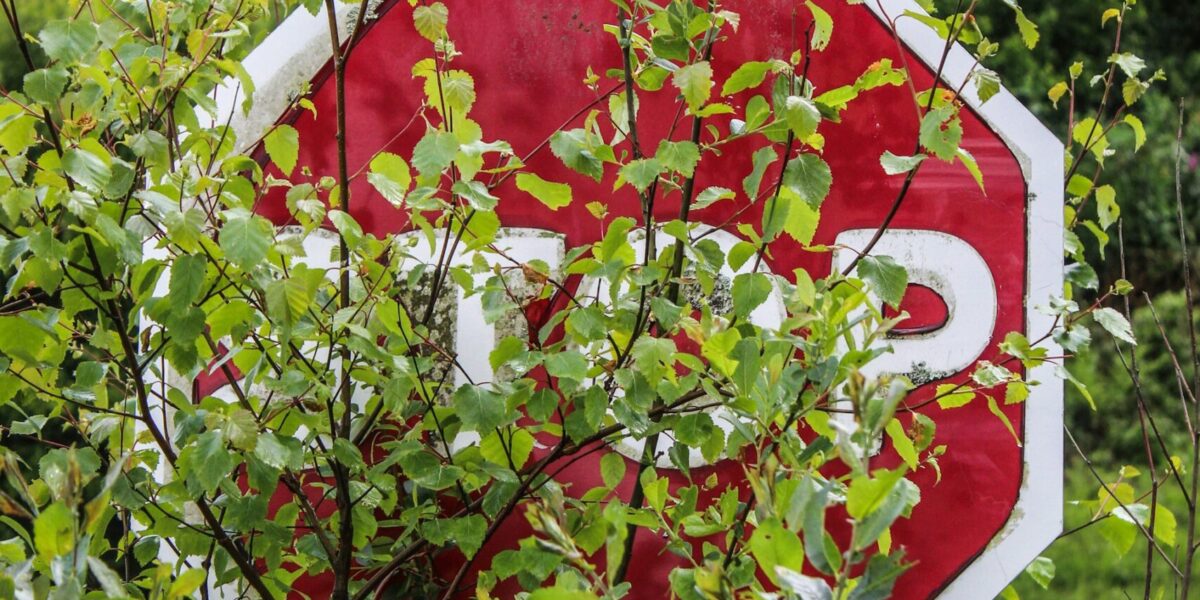
Didn’t See the Signs
Overgrown roadside foliage blamed for speeding by drivers
Overgrown hedges, trees and roadside vegetation are causing widespread problems for drivers.
Almost one in five motorists say they have accidentally exceeded a speed limit because foliage has hidden a road sign.
Speeding remains a stubbornly significant contributor to crashes and the severity of road incidents.
It’s a jungle out there
New research from the RAC found that 19% of drivers have broken the speed limit after being unable to see a sign obscured by branches, trees or hedges.
Almost all drivers surveyed (94%) reported encountering obscured road signs, while 51% said they saw them frequently.
Speed limit signs were among those most commonly affected, alongside ‘STOP’ and ‘GIVE WAY’ signs.
The consequences extend beyond speeding: 21% of respondents had missed a turn, 13% had been forced to brake sharply, and 5% had accidentally ignored a ‘GIVE WAY’ sign.
Meanwhile, 80% said overgrown foliage had made it more difficult to pull safely out of a junction or roundabout.
RAC spokesperson Harriet Hernando said: “It’s concerning that so many drivers have broken the speed limit because they haven’t been able to see a road sign that has been obscured by foliage.”
She added that while accidentally missing a ‘GIVE WAY’ sign might be relatively uncommon, “the effects of doing so can be catastrophic”.
Obscure defence
There is an important distinction between not knowing the speed limit and a speed limit that is not adequately signed.
Government guidance states that traffic authorities have a duty to erect and maintain prescribed speed-limit signs, while DfT guidance says drivers should be given clear, visible and regular signing so they can know what limit is in force. It specifically says speed-limit signs should not be obscured by vegetation.
There is also established case law supporting motorists in some circumstances.
In Coombes v DPP (2006), a speeding conviction was overturned after signs marking a 30mph limit were obscured by overgrown hedgerows and could only be seen when the driver reached them.
The court concluded that the signs had not provided sufficient guidance to allow the driver to reduce speed in time.
However, this does not mean an obscured sign automatically provides a defence.
Circumstances matter, including how much of the sign was hidden, whether alternative signs or road markings were present, and whether the driver had adequate opportunity to identify the restriction.
Drivers should therefore not assume that blaming foliage will automatically cancel a speeding offence.
Anyone challenging a prosecution would need evidence of the signage’s condition at the relevant time.
Speed the killer
The issue matters because speed continues to play a significant role in serious and fatal collisions.
The latest DfT figures show that in 2025, at least one speed-related factor was recorded in 52% of fatal collisions in Great Britain.
Speed-related factors were present in 38% of fatal or serious collisions, while exceeding the speed limit was recorded in 29% of fatal collisions.
Overall, Great Britain recorded 1,602 road deaths and 29,467 killed or seriously injured casualties in 2024.
The police continue to regard speeding as one of the major road-safety threats, with the National Police Chiefs’ Council previously warning that higher speeds increase both the likelihood of a collision and the severity of its consequences.
Chief Constable Anthony Bangham stressed that “the limit is the limit for a reason”.
There is also evidence that this is not simply a seasonal problem.
An earlier AA survey found 40% of drivers were concerned about speed-limit and warning signs being blocked by overgrown foliage, while 42% said vegetation was affecting sightlines at junctions.
Taking responsibility
The RAC is warning householders to check that hedges, trees and plants on their property are not encroaching onto roads or pavements.
Under Section 154 of the Highways Act 1980, councils can require offending vegetation to be cut back, with 14 days’ notice.
If the work is not completed, the authority can arrange it and recover the cost.
The RAC says 58% of those surveyed were unaware they could face such action.
For drivers, the message is equally clear: an obscured sign can be a genuine safety and legal problem, but it remains the driver’s responsibility to maintain a safe speed and exercise caution.
Obscured signage should be reported to the relevant local authority, or to National Highways where it affects a motorway or major trunk road.
Maintaining sense
The RAC findings underline that roadside maintenance is not simply an issue of tidiness.
If vegetation prevents drivers seeing regulatory signs or identifying hazards at junctions, it can undermine both compliance and road safety.
However, every driver is responsible for driving legally and with due care and attention.
That said, with speed implicated in more than half of fatal collisions, ensuring that limits are clearly visible should be regarded as a basic part of effective speed management.