
Source: Intelligent Instructor
Seeing in the Night
Government approves new generation of ‘cat’s eyes’ designed to improve road safety and cut maintenance costs
One of the most important inventions for nighttime road safety has been upgraded.
A new generation of illuminated “cat’s eyes” has been approved for use on Britain’s roads.
It’s a move that could improve nighttime safety while reducing the cost and disruption of installing the technology.
Sun and moon
The Department for Transport (DfT) has granted Type Approval for a new solar-powered road stud that can be fitted using the same methods as traditional cast iron road studs.
This allows highway authorities to upgrade existing roads without the need for major engineering work.
Developed by highways technology company Clearview Intelligence in partnership with Prismo Road Markings, the SolarLite S381 is the latest version of the familiar reflective road stud found on roads across the UK.
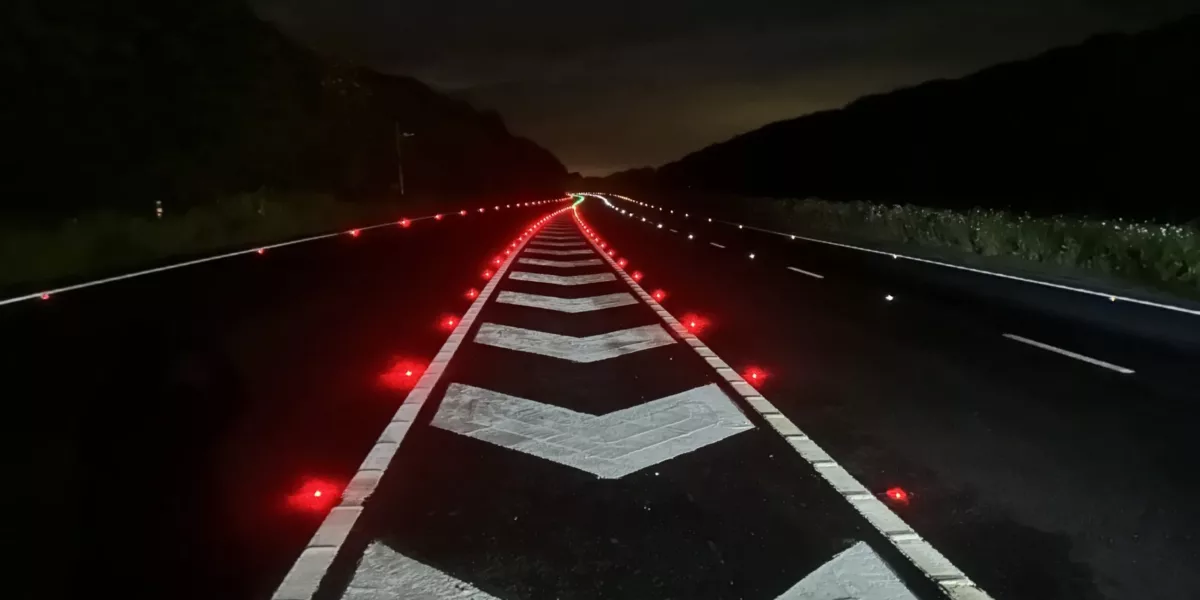
Unlike conventional “cat’s eyes”, however, the new system uses solar-powered LED lights to illuminate the road ahead actively.
The approval is expected to make it easier for local authorities and National Highways to incorporate the technology into routine resurfacing and road maintenance programmes, avoiding the additional cost and disruption often associated with installing new road safety systems.
The long view
The biggest advantage is visibility.
Traditional retroreflective road studs rely entirely on a vehicle’s headlights to reflect light towards the driver.
While effective in good conditions, their performance can deteriorate significantly during heavy rain, fog or darkness.
The new SolarLite studs actively emit light and can be seen from up to 900 metres away, around ten times further than conventional passive road studs, which are typically visible from about 90 metres in favourable conditions.
The increased visibility allows drivers to identify bends, junctions, lane changes and other hazards much earlier, giving them more time to react and positioning the technology as a potential aid in reducing nighttime collisions.
Scared of the dark
Driving in darkness remains disproportionately dangerous despite significantly lower traffic volumes than during daylight hours.
Poor visibility is a major contributory factor in many serious collisions, particularly on rural roads where lighting is limited, and drivers often travel at higher speeds.
By providing a continuous illuminated guide along the road, active road studs are intended to improve driver confidence, particularly in poor weather, while making road layouts clearer and easier to follow.
The newly approved design also addresses one of the barriers that has previously limited the widespread use of active road studs.
Rather than requiring specialist installation, the SolarLite S381 has been designed to fit directly into standard cast-iron road-stud housings already familiar to highway contractors.
This means authorities can install the illuminated studs during planned resurfacing or road marking works using existing techniques, reducing both costs and disruption to motorists.
Ease and safety
Alastair King, Head of SolarLite at Clearview Intelligence, said the approval represented an important milestone for the technology.
“The approval marks the arrival of the latest addition to the company’s long-established SolarLite range, combining its proven solar-powered active road stud technology with a heavy-duty cast iron housing.
“It complements our established products by bringing the technology to schemes where cast iron housed road studs are preferred or specified, while also providing a direct upgrade path from conventional passive retroreflective studs to active illuminated guidance.”
Designed for Britain’s demanding road conditions, the new cast iron housing offers greater protection against heavy traffic loads and is built to withstand winter maintenance operations, including snow ploughs.
Powered up
The units are entirely self-powered by solar energy, eliminating the need for mains electricity or underground cabling, and have an expected service life of between eight and 10 years, helping to reduce long-term maintenance costs.
With Department for Transport approval now secured, highway authorities across the UK can begin specifying the new illuminated road studs on suitable schemes, offering the prospect of brighter, safer roads while making it easier and more cost-effective to replace traditional reflective “cat’s eyes” as part of routine maintenance programmes.